A commercial air conditioning system failure rarely announces itself politely. More often it happens at the worst possible moment: mid-summer, mid-production run, mid-service period. The compressor cuts out. The building temperature climbs. Staff slow down or call in sick. Customers leave. Perishable stock is compromised. And by the time a technician arrives, the clock is already ticking on losses that extend well beyond the repair bill.
Commercial air conditioning is not simply a comfort system in a business environment. It is operational infrastructure. In manufacturing facilities, medical practices, retail spaces, hospitality venues, and office buildings across Australia, climate control underpins productivity, protects product integrity, and determines whether a business can operate at all during the country’s extended summer heat periods.
Yet the gap between how businesses depend on their commercial HVAC systems and how they invest in maintaining them remains significant. Reactive management, the fix-it-when-it-breaks approach, consistently costs more than proactive maintenance when the full picture of downtime, emergency callout rates, accelerated equipment wear, and staff productivity impacts is accounted for. This article examines that gap and what businesses can do to close it.
The Real Cost of HVAC System Neglect in Commercial Settings
Most business owners and facilities managers think about air conditioning in terms of energy bills and repair invoices. These are real costs, but they represent only the visible fraction of what a poorly maintained or failing HVAC system costs a commercial operation.
The more significant costs are often indirect. Consider the flow-on effects of a system failure in different commercial contexts:
- A retail business losing two to three customers per hour during a peak weekend trading period because the store is too hot to browse comfortably
- A hospitality venue turning tables away during a Friday dinner service because kitchen and dining area temperatures have reached unacceptable levels
- A pharmaceutical or food production facility halting a production run because temperature and humidity conditions have gone outside the controlled range required for product integrity
- An open-plan office where productivity drops measurably above 26 degrees Celsius, a documented response that affects output across every hour the system is not performing
The Australian Bureau of Statistics and various productivity research bodies have consistently linked thermal comfort to worker output. Beyond comfort, there are compliance implications. Some industries operate under regulatory requirements for temperature control, and a HVAC failure that takes conditions outside the permissible range is not just an operational problem. It can be a compliance problem.
Understanding Ducted Refrigerated Air Conditioning for Commercial Applications
For many commercial and industrial buildings across Australia, ducted refrigerated air conditioning represents the primary whole-building climate control solution. Unlike evaporative systems that depend on dry ambient conditions, ducted refrigerative technology operates effectively regardless of humidity, making it the reliable choice for facilities that cannot afford variable performance across different weather conditions.
A well-designed ducted refrigerated air conditioning system for a business environment differs from a residential installation in several critical respects.
Commercial duty cycle. Business premises operate air conditioning for significantly more hours per day and more days per year than residential installations. Commercial-grade equipment is specified for these extended duty cycles, with compressor and heat exchanger components rated for sustained continuous operation rather than the intermittent use patterns of a home.
Zoning and control sophistication. A commercial building typically has multiple zones with different temperature requirements, occupancy patterns, and heat load profiles. Reception areas, server rooms, meeting rooms, and production spaces all present different demands. A well-designed ducted system for a commercial environment integrates zone controls that allow independent temperature management across these areas, reducing energy consumption by conditioning only occupied zones to the required parameters.
Fresh air and ventilation requirements. Commercial buildings in Australia must meet the ventilation requirements of AS 1668.2, the standard for mechanical air conditioning in buildings. Commercial ducted systems must incorporate adequate fresh air introduction and management, which residential systems are not required to provide. Getting this right has implications for both occupant health and regulatory compliance.
Condensate management. Commercial installations generate larger volumes of condensate than residential systems, and inadequate condensate management is a leading cause of ceiling and fitout damage in commercial buildings. Properly designed commercial systems include condensate management as a deliberate design element.
HVAC Repair Priorities: What Drives Failure and How to Get Ahead of It
Understanding the most common HVAC failure modes in commercial settings is the starting point for building a maintenance approach that prevents them.
Compressor failure is the most expensive single repair event in any refrigerative HVAC system. Compressors fail for several reasons, but the most preventable are operating with low refrigerant charge, which causes the compressor to run hot and outside its designed parameters, and inadequate lubrication from contaminated refrigerant oil. Regular refrigerant pressure checks and oil condition analysis as part of a structured maintenance program catch both of these conditions before they become compressor damage.
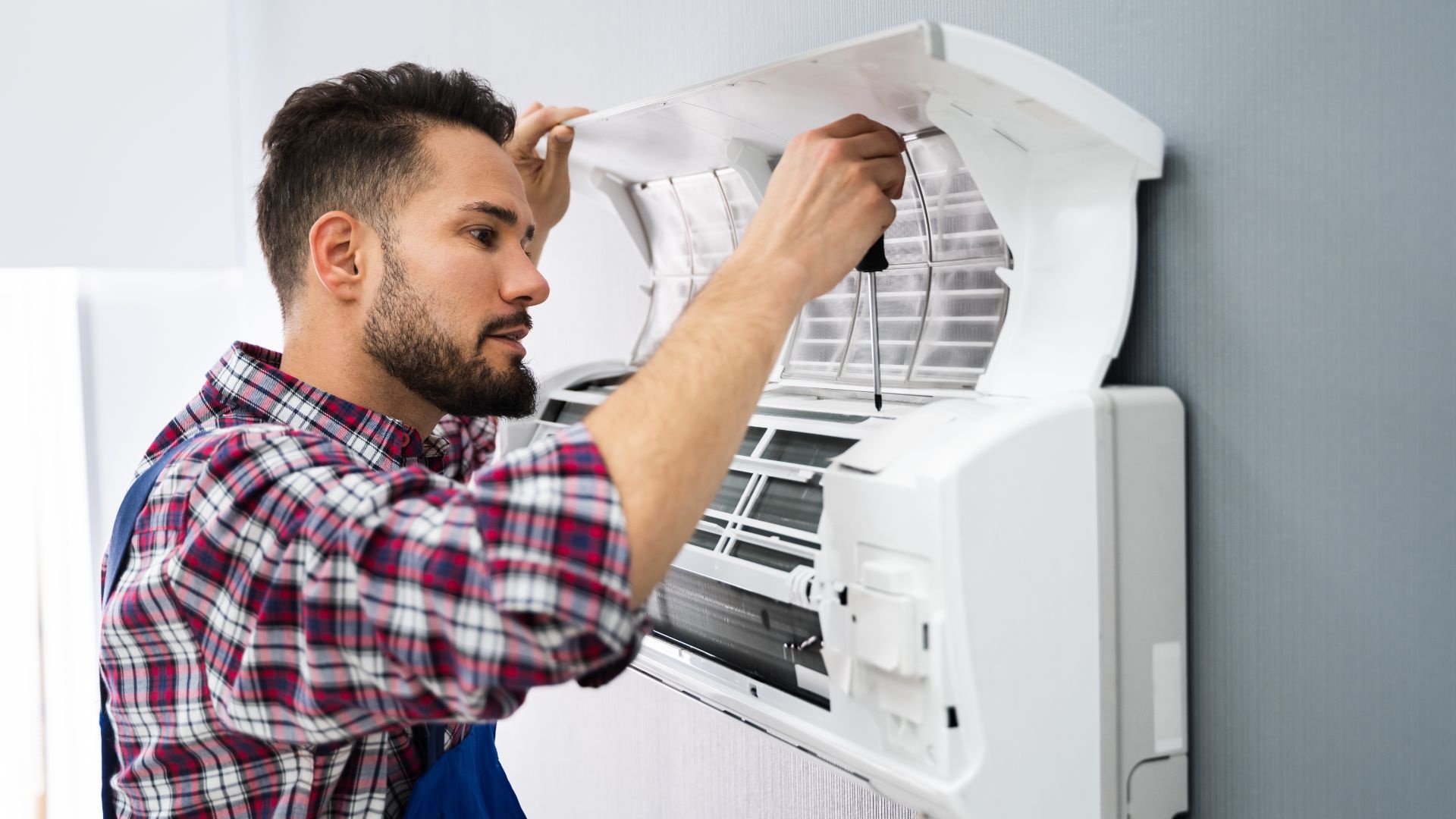
Filter and coil fouling is the most common cause of progressive performance decline in commercial HVAC systems. In commercial environments, the indoor unit draws a high volume of air over an extended daily operating period. Dust, biological matter, cooking aerosols, and in coastal environments, salt particles, accumulate on filter media and coil surfaces. A fouled evaporator coil reduces heat exchange efficiency, forces the compressor to work harder, increases energy consumption, and progressively reduces the system’s capacity to achieve the required temperature.
Electrical component failures including capacitor degradation, contactor wear, and control board faults are common in aging commercial systems. These failures often announce themselves through intermittent operation, hard starting, or fault codes before progressing to total failure. A maintenance schedule that includes electrical inspection and testing catches these developing faults.
Refrigerant circuit leaks develop progressively in most systems over time. Small leaks may not affect system performance noticeably in the short term, but a system running below its design refrigerant charge operates less efficiently and with greater thermal stress on the compressor. Annual refrigerant pressure checks identify low-charge conditions before they cause damage.
For businesses dealing with an existing HVAC problem or wanting to review their maintenance approach, understanding the full scope of professional HVAC repair and servicing capabilities available in the commercial sector is the starting point for making the right decisions.
Maintenance Contracts vs Reactive Servicing: The Financial Case
The financial argument for commercial HVAC maintenance contracts over reactive servicing is compelling when the full cost picture is considered, but it is rarely presented in terms that account for the indirect costs that reactive management accumulates.
Emergency callout rates for commercial HVAC contractors are typically 50 to 100 percent higher than scheduled service rates. A system failure that requires emergency attendance on a weekend during summer heat carries a premium that a scheduled maintenance visit would not.
Accelerated equipment wear from deferred maintenance shortens equipment service life. A commercial air conditioning system that receives annual professional servicing can reasonably be expected to operate reliably for 15 to 20 years. The same system managed reactively may require compressor replacement at year 8 or 10, a cost that significantly exceeds the cumulative value of the maintenance visits that would have prevented it.
Energy efficiency decline in poorly maintained systems is both real and measurable. Industry data suggests that commercial HVAC systems operating with fouled coils and suboptimal refrigerant charge consume 10 to 30 percent more electricity than properly maintained equivalents producing the same cooling output. Over a full cooling season, that energy premium represents a cost that has no productive return.
Tenant and occupant productivity impacts are less quantifiable but genuinely significant. A business that operates in a well-maintained, consistently comfortable environment avoids the productivity drag, the staff complaints, and the customer experience impacts that a struggling HVAC system creates.
A well-structured maintenance contract with a qualified commercial HVAC contractor should specify the frequency of scheduled visits, the scope of each visit, the response time commitment for callouts between scheduled maintenance, and the documentation provided after each visit. Maintenance without documentation is maintenance without accountability.
Choosing the Right Commercial Air Conditioning System
For businesses undertaking a new installation or replacing an end-of-life system, the equipment selection decision has long-term operational and financial consequences that warrant careful consideration.
System capacity and heat load calculation. Commercial system sizing must be based on a proper heat load calculation that accounts for the building’s thermal envelope, occupancy patterns, internal heat gains from equipment and lighting, solar heat gain through glazing, and local climate data. A system that is undersized for the peak heat load cannot maintain the required temperature on the hottest days of the year. A system that is significantly oversized short-cycles, reducing dehumidification efficiency, increasing compressor wear, and failing to achieve the stable temperature control that an appropriately sized system provides.
Efficiency ratings and running cost implications. For commercial systems, the cumulative energy cost over the equipment’s service life typically exceeds the capital cost of the equipment. A system with a higher coefficient of performance (COP) and energy efficiency ratio (EER) costs more upfront but delivers lower running costs that compound across 15 to 20 years of operation. The business case for investing in higher-efficiency equipment is often stronger than the purchase price differential suggests.
Redundancy considerations. For businesses where temperature control is critical to operations, specifying some level of redundancy in the HVAC system design, whether through multiple independent circuits serving critical zones or through standby capacity, reduces the risk that a single component failure takes the entire system offline.
For Perth businesses planning a new commercial air conditioning installation, engaging with experienced contractors who understand the full scope of commercial air conditioning design and installation provides access to the system design expertise that determines whether the investment performs as expected over its full service life.
Conclusion
Commercial air conditioning is too important to the daily operation of Australian businesses to be managed reactively. The failure costs, including downtime, emergency repair rates, accelerated equipment wear, and productivity impacts, consistently exceed what a proactive maintenance program would have cost by a substantial margin.
The businesses that get this right are those that treat their HVAC infrastructure with the same discipline they apply to other critical operational assets: scheduled maintenance, documented service records, qualified contractors, and equipment selection decisions that account for the full lifetime cost rather than just the purchase price.
In Australia’s climate, particularly in cities like Perth where extreme summer temperatures stretch cooling equipment to its limits for months at a time, the reliability of commercial air conditioning is not a nice-to-have. It is a fundamental business requirement, and managing it well is a straightforward operational priority.