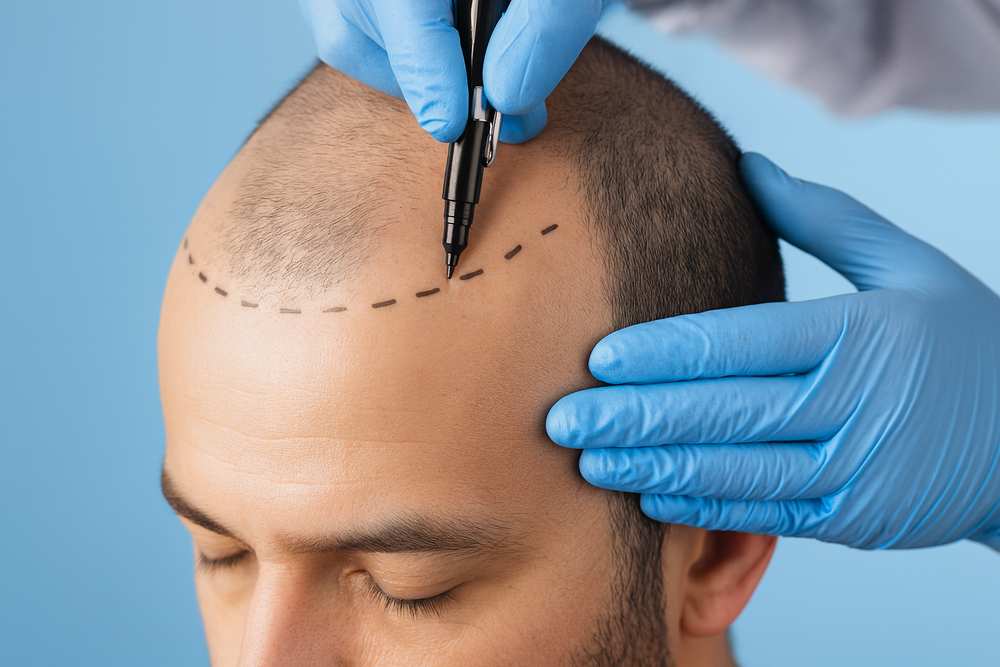
Even if hair restoration has evolved over time, a natural hairline design still defines good outcomes more than anything else. Restoring hair to the scalp is only one aspect of a Hair transplants UK. The goal is to create an appearance that is in harmony with age, hair growth patterns, and facial characteristics. Patients find the whole makeover much more believable and fulfilling when the hairline looks natural.
Due to customers’ desire for hard-to-detect outcomes, several clinics providing hair transplant procedures in the UK now place a strong emphasis on customised hairline planning. A well-crafted hairline may significantly boost confidence and attractiveness, but a badly created one can make even a technically successful treatment seem artificial.
Hairline Placement And Facial Balance
The balance of the face is greatly influenced by a natural hairline. Each person is different in terms of hair density, forehead size, and face dimensions. As a result, there should never be a one-size-fits-all method for placing hairlines. Before determining where the new hairline should start, knowledgeable experts examine face symmetry and current hair patterns.
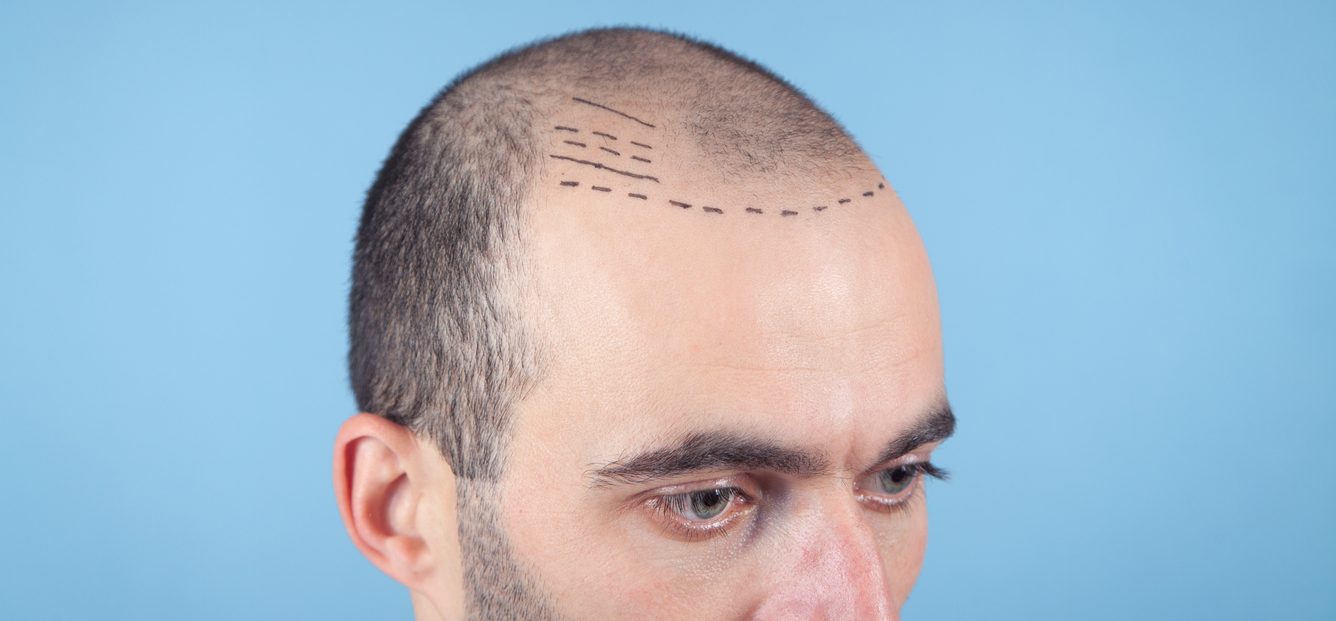
As the patient matures, the hairline may seem artificial if it is positioned too low. The findings may not show the intended improvement if it is too high. Additionally crucial are subtle transitions close to the forehead and natural-looking density. Since natural hairlines are seldom exactly straight, soft and uneven patterns often provide the most convincing look.

The Significance Of Hair Density And Direction
Another crucial component of hairline design is hair direction. Naturally, hair develops at various angles around the scalp, particularly in the vicinity of the forehead and temples. Surgeons must carefully align grafts to replicate these normal growth orientations after transplantation.
The ultimate result is also impacted by density. Grafts that are overcrowded at the front may provide the impression of an artificial wall. More realistic effects are often obtained by gradually increasing the thickness from the front to the rear. The capacity to produce delicate transitions that closely mimic natural hair growth has increased thanks to modern technology.
When patients look into the Hair transplant costs, they often find that the price might change based on how intricately the grafts are designed and positioned. More talent, preparation, and accuracy are often needed for more sophisticated tasks.
Long-Term Appearance Is Important
Many years after the treatment, a hair transplant should still seem natural. For this reason, while designing a hairline, long-term planning is crucial. Before making the final design, surgeons must take age changes and future patterns of hair loss into account.
Conservative hairline implantation may avoid abnormal outcomes later in life, particularly for younger patients. Transplant designs should take into account the fact that hairlines gradually develop with age. Skilled workers steer clear of developing too aggressive methods that can eventually seem inappropriate.
For decades, a well-planned transplant may age gracefully and have a realistic look. Many people take their time choosing skilled doctors for their operation because of this long-term outlook.
Developments In Contemporary Hair Restoration
Natural hairline production has been significantly improved by technology and better surgical techniques. Surgeons may now more successfully replicate intricate designs due to smaller grafts, accurate extraction techniques, and sophisticated implantation instruments.
Hair transplants London often place equal emphasis on creative design and technical proficiency. It takes both medical expertise and aesthetic judgment to create a natural hairline. Because each graft location adds to the overall visual impression, artistic perfection is crucial.
Additionally, better recovery and less noticeable scars are made possible by modern treatments, assisting patients in achieving modest and organic results. Patients are growing more concerned with a realistic look rather than just replacing lost hair as methods continue to advance.
In Conclusion
One of the most crucial elements of a successful hair transplant is still the design of the natural hairline. In addition to producing results that fit in perfectly with natural hair growth, a realistic hairline may boost self-esteem and balance the face. The ultimate look is influenced by a number of factors, including location, density, angle, and long-term planning.
Patients are preferring natural results over drastic alterations as hair restoration technology advances. A well-thought-out hairline guarantees that a transplant will not only restore hair but also improve the overall look in a convincing and long-lasting manner.